
Low Volume Manufacturing Services

Low Volume Manufacturing Company You Can Rely On
As one of the experienced low volume manufacturing companies in China, RpProto specializes in low volume and bridge production. We provide professional low volume manufacturing services for plastic prototypes and short-run production.
Our low-volume manufacturing solutions help customers worldwide produce from hundreds to thousands of parts and accelerate their time to market.
Using CNC machining, vacuum casting, and plastic injection molding, we deliver high-quality plastic parts at competitive costs, with fast lead times and flexible production quantities.

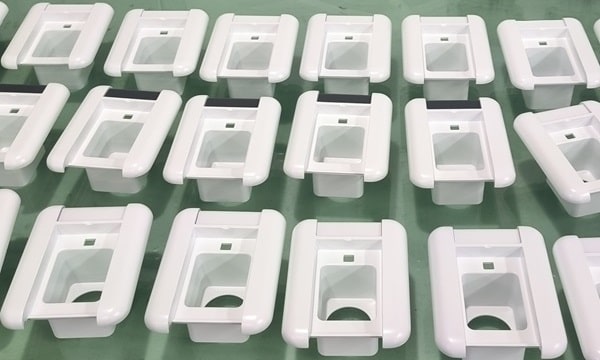
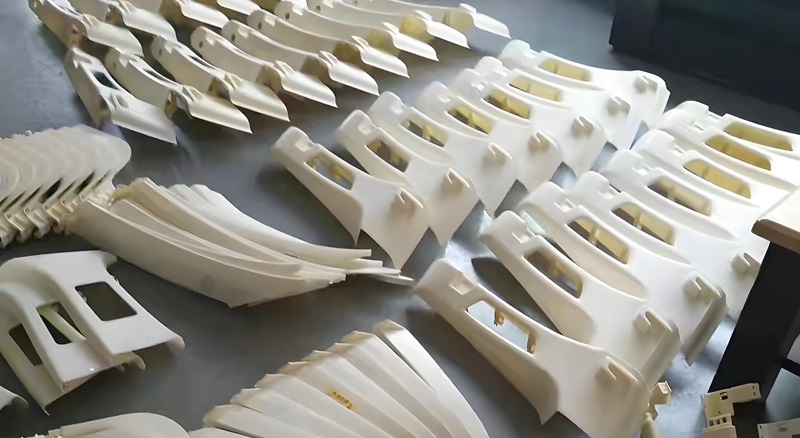
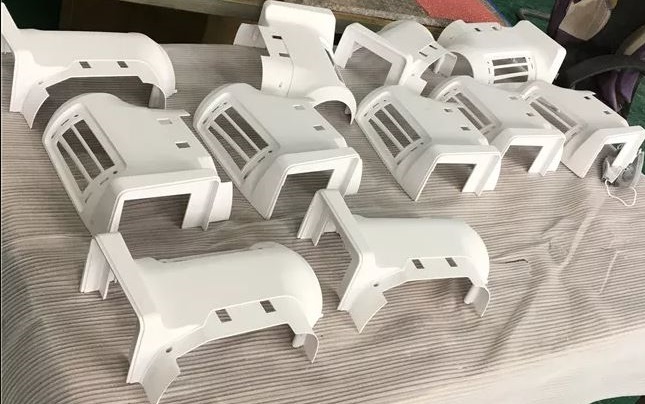
Low Volume Plastic Manufacturing Capabilities
RpProto specializes in low volume plastic manufacturing, offering multiple processes to match different design and performance requirements.

Vacuum Casting / Urethane Casting
Vacuum casting process is ideal for low-volume plastic part production. The entire process takes only a few days. It produces plastic parts with complicated form structures, fine surface details.
- Excellent surface finish similar to injection molding
- Fast mold fabrication and low tooling cost
- Ideal for functional prototypes and small batches
- Wide range of polyurethane resins available

CNC Machining for Plastic Parts
- Tight tolerances and high repeatability
- Wide material selection including engineering plastics
- Ideal for functional and structural components
- No tooling required for fast turnaround

Low Volume Injection Molding
Instead of expensive steel molds, RpProto offers low-volume injection molding with rapid tooling (aluminum molds or soft molds) for faster and cheaper production of parts. It has lower durability for long production runs.
- Production-grade quality at lower volumes
- Engineering plastics available
- Bridge production before mass manufacturing
- Aluminum or soft steel tooling

Industrial 3D Printing
RpProto industrial 3D printing deliver low volume complex plastic parts and short-run production parts with excellent detail, strength, and surface quality.
- SLA, SLS, MJF technologies available
- Complex geometries with fast turnaround
- Ideal for design validation and testing
- No minimum order quantity
Why Choose Low-Volume Manufacturing with RpProto?
Choosing low-volume manufacturing with RpProto allows you to reduce production cost while maintaining high quality and speed. RpProto act as your local manufacturing partner in China—without communication barriers or quality uncertainty.
Small quantity of products enable you access to markets rapidly
Save the tooling cost and need no minimum orders
Flexible and can be adjusted at any time based on market responses
Respond quickly and shorter product life cycles
If you are searching for reliable low volume manufacturing companies offering low volume plastic parts production, RpProto is ready to support your project.
24hr
Response
Free
Quote
Available
NDA
FAQs – Low Volume Manufacturing Services
Low volume manufacturing is the process of producing a small quantity of parts or products. This allows companies to respond quickly to market demands, test new products, or cater to niche markets without committing to high production costs upfront.
Low volume manufacturing focuses on flexibility, fast turnaround, and low tooling cost, while mass production emphasizes very high quantities and long-term cost reduction. Low volume is ideal before committing to full-scale production.
RpProto China offers cost advantages, mature supply chains, and fast production capacity. We provides engineering feedback, and strict quality control to ensure reliable results.
Simply upload your CAD files and project details. Our engineers will review your design and provide a quote with lead time and process recommendations within 24 hours.
We provide DFM feedback before production to optimize part design for strength, cost, and manufacturability—especially important for low volume plastic parts.
Vacuum casting typically produces the best cosmetic surface finish of the three, closely replicating the texture and detail of the master pattern. It’s ideal for consumer product prototypes, presentation models, and parts requiring a Class-A surface.
CNC machining produces very clean surfaces but usually requires post-processing (sanding, painting, or anodizing) for cosmetic applications. Injection molding can deliver production-quality finishes once the mold is polished, but the quality largely depends on mold craftsmanship.
CNC machining holds the tightest tolerances—typically ±0.05 mm or better—making it the preferred choice for functional parts, structural components, and assemblies that require precise fit. Vacuum casting typically achieves ±0.3 mm, and injection molding ±0.1–0.5 mm depending on material shrinkage and mold quality. If your part has critical dimensions or mating interfaces, CNC machining is the most reliable option.
CNC machining offers the widest material flexibility—virtually any engineering plastic (ABS, PC, PEEK, POM, PTFE, etc.) or metal (aluminum, stainless steel, titanium) can be machined.
Vacuum casting is limited to polyurethane resins that simulate common plastics like ABS, PP, and TPU.
Injection molding works with most thermoplastics but requires a new or modified mold if you change materials significantly, as shrinkage rates differ between resins.
At 500 parts, you’re at the crossover point where low volume injection molding typically becomes more cost-competitive than CNC machining or vacuum casting, especially if the part geometry is straightforward. However, if your part has complex internal features, tight tolerances, or you’re still refining the design, CNC machining remains a practical option. We recommend sharing your CAD file with our engineers for a multi-process quote comparison so you can make the most cost-effective decision.